The official export channel of Fedar printers.
For any printer sold under Fedar brand from other China regions,we do not provide relevant after-sales service!
Underwear and Swimwear Sublimation Printing: Fabric and Heat
Sublimation Printing for Underwear and Swimwear
Underwear and swimwear is the one segment where the fibre question decides whether the job is possible at all. Most of this market is nylon and spandex, and nylon will not take disperse dye. It stains, then washes out pale. Before anything else, confirm the shell fabric is polyester-based: polyester-spandex at 80/20 or 85/15, polyester mesh, or PBT for chlorine resistance. That single check explains most failed samples. A swimsuit in polyamide elastane prints beautifully on the strike-off and looks washed out after two pool sessions, because the dye never bonded to the fibre in the first place. Spandex is the second constraint. Prolonged contact above roughly 180 degrees Celsius relaxes elastane, so the 190 to 200 degree setting that suits jersey will leave a swimsuit limp at the waist and a bra band that no longer recovers. Run cooler, extend the dwell, and keep the panel on the calender only as long as the shade needs. Weight sets the rest. Swimwear sits around 180 to 220 gsm and takes a heavier ink load than lingerie mesh at 60 to 120 gsm, where too much ink stiffens the hand on a garment worn against skin.
From Fibre Approval to Making Up
Four steps, and the first two decide the yield. Fabric approval. Get the composition in writing per colourway. Black and navy shells hide a nylon content that white and pastel shells expose immediately, so approve on the lightest colour in the range. Nesting. These panels are small, so width utilisation matters more than speed: a 1.9 m bed carries a dozen bra or brief panels across, and the nesting decides how much paper you waste per garment. Transfer. Lower temperature, longer dwell, even tension. Feed paper and shell together so the elastane is never stretched on the calender; a panel printed under tension springs back to a smaller print than the pattern block. Making up. Print before cutting, never after. Seamless knitwear is tubular, and a flat-bed or calender transfer cannot wrap a tube, so the panels have to be printed flat and joined afterwards. Two faults recur. Ghosting, from a shell that shifted because it was fed slack. And shade shift on stretch: a print that matches on the flat panel reads darker once the fabric is stretched over the body, because the same ink covers more area. Print a size set, not a single swatch, before approval. Storage matters more here than in any other segment. Elastane takes a set when panels are stacked warm, and a folded swimsuit keeps the crease for good.
From Fibre Approval to Making Up
Sports Bra
Sports Bra
Brief
Brief
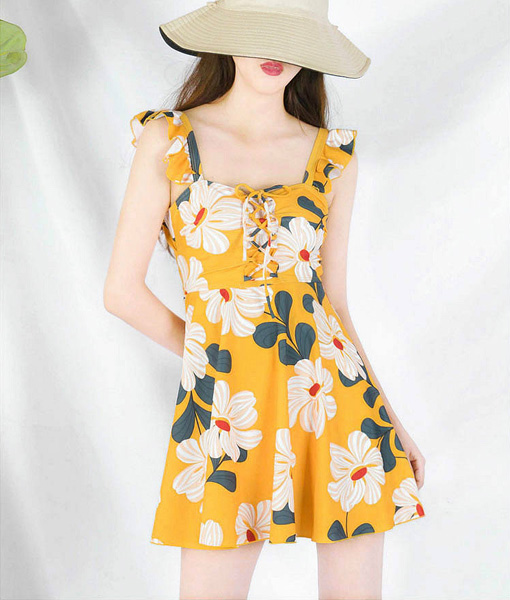
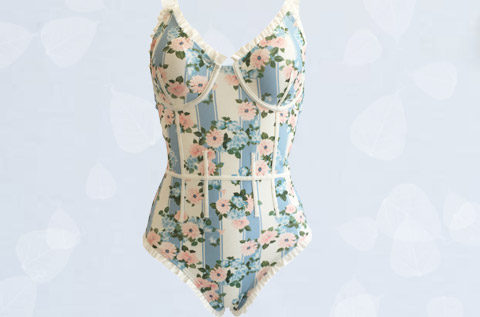
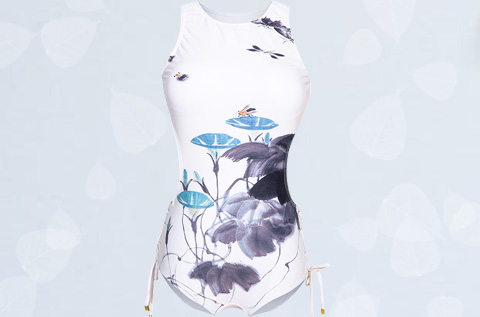
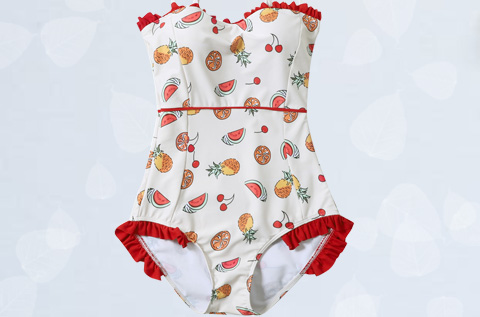
Swimsuit
Swimsuit
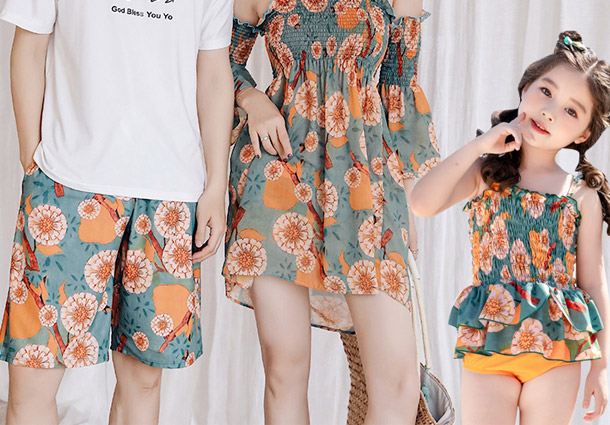
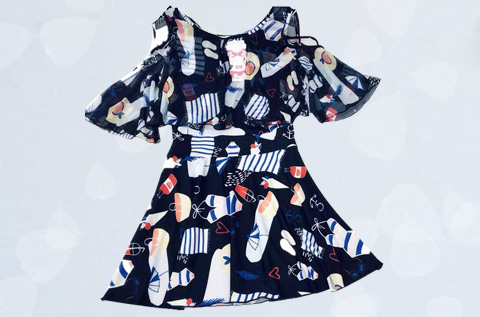
Beachwear
Beachwear
Small Panels, Many Styles: Which Machine
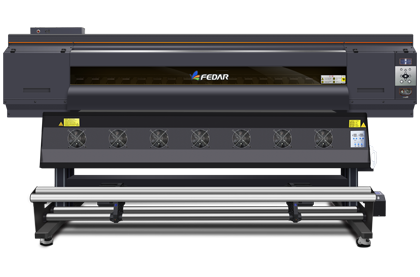
Small panels, many styles, short runs: the constraint is nesting and changeover, not top speed. Entry and sampling: a 1.9 m three-head machine (FD5193E) prints a strike-off in minutes and runs 120 square metres an hour at two-pass. On panels this small, one bed carries a full size set. Mixed production: FD6194E at 180 square metres an hour at two-pass, 120 at three-pass. Slower passes matter here, because fine lace and mesh detail breaks down at two-pass. Volume programmes: FD6198E at up to 370 square metres an hour, once a style is confirmed and repeat orders dominate. Wider work: 3.2 m (FD5328E) only pays off if you also print bedding or apparel panels; on underwear alone the extra width sits idle. Three checks. Whether your shell is polyester-based, since that decides if the job exists. Whether the finishing line can run cool enough for elastane. And how many styles a week you change, because on this product the paper and profile changeover is the real cycle time. Paper follows the panel. Narrow rolls reduce waste on briefs and bras; keep a wider roll only for swimwear and leggings panels. Ink load is set per style, not per machine. On a stretch shell, excess ink reads as a stiff patch exactly where the garment moves most, so keep density to what the shade needs and use paper that releases cleanly.

+
More Related Products